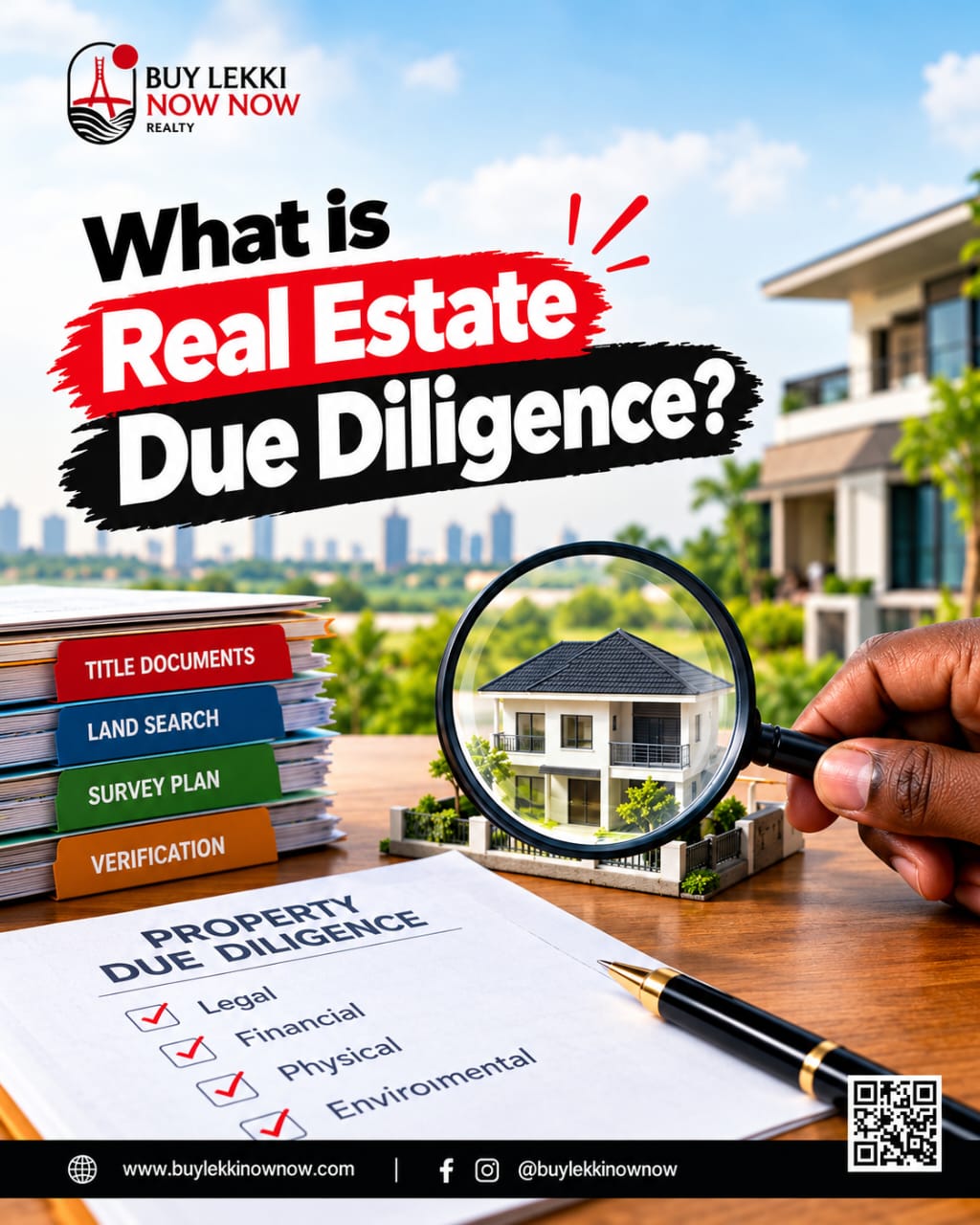
What Is Real Estate Due Diligence in Nigeria? A Practical Checklist Before You Buy Land or Property
Buying land or property in Nigeria can be a smart investment, but one mistake can cost you millions of naira. That is why real estate due diligence is essential before committing your money to any property.
A property may have an attractive price, impressive estate entrance, and convincing sales documents, yet still have ownership disputes, government acquisition issues, or an invalid title.
So, how do you protect yourself?
What Is Real Estate Due Diligence?
Real estate due diligence is the process of independently verifying a property's ownership, title documents, location, legal status, physical condition, and potential risks before buying or investing in it.
In simple terms, it means checking the facts before paying for a property.
Whether you are buying land in Ibeju-Lekki, a house in Lekki, or commercial property elsewhere in Nigeria, proper due diligence helps you make informed decisions and reduce the risk of costly disputes.
Why Is Property Due Diligence Important in Nigeria?
Skipping property due diligence can expose buyers to several risks, including:
Land fraud: Paying someone who has no legal authority to sell.
Multiple sales: Discovering that the same land has been sold to other buyers.
Government acquisition: Purchasing land affected by government acquisition or development restrictions.
Family disputes: Buying property without the necessary consent or authority.
Defective documents: Relying on forged, incomplete, or inconsistent title documents.
Boundary disputes: Discovering that the land is smaller than advertised or overlaps neighbouring property.
Unexpected costs: Facing additional fees, unpaid obligations, or title perfection expenses.
These risks make independent verification essential, particularly in developing areas where land transactions are frequent.
10 Essential Real Estate Due Diligence Checks Before Buying
1. Verify the Seller's Identity
Confirm that the seller owns the property or has legal authority to sell it. Request valid identification and investigate how the seller acquired the land.
For family-owned property, establish that the appropriate family members have authorised the transaction. If an agent is involved, verify their authority to act for the owner.
2. Examine the Title Documents
Ask a qualified property lawyer to review and verify the relevant documents. Depending on the property's history, these may include:
Certificate of Occupancy (C of O).
Deed of Assignment.
Governor's Consent.
Registered historical title documents.
Gazette or evidence of excision, where applicable.
Survey plan and supporting ownership records.
Remember, having a document does not automatically mean the seller has a valid, transferable title. The documents and chain of ownership must be properly examined.
3. Conduct a Land Registry Search
A search at the relevant Land Registry can help establish title particulars and identify registered interests, mortgages, restrictions, or previous transactions.
In Lagos, engage a property lawyer to conduct the appropriate official searches. Do not rely solely on documents or search reports provided by the seller.
4. Check for Government Acquisition
Before buying land, establish whether it is affected by government acquisition, proposed roads, drainage reservations, or other restrictions.
In Lagos, this may involve obtaining the correct survey plan and coordinates and arranging official charting or land-status verification through the relevant authorities.
Claims such as “C of O coming soon” or “excision in process” should not replace independent verification.
5. Verify the Survey Plan and Boundaries
Engage a qualified surveyor to confirm the property's location, coordinates, dimensions, and boundaries.
Ensure the survey plan matches the actual land being sold. Check for overlapping surveys, encroachment, disputed access roads, and discrepancies in plot size.
6. Inspect the Property Physically
Visit the property or appoint an independent professional to inspect it on your behalf.
Check the access road, drainage, terrain, possible flooding, existing occupants, boundary markers, and surrounding development. For buildings, arrange a professional inspection where necessary.
Pictures and videos alone cannot establish a property's legal status or physical condition.
7. Investigate Disputes and Third-Party Claims
Find out whether the property is involved in family disagreements, court cases, competing ownership claims, leases, mortgages, or previous sales.
Your lawyer should investigate relevant records and establish whether anyone else has a legal interest in the property.
8. Confirm Planning and Development Restrictions
Before purchasing, confirm that the property can legally be used for your intended purpose.
Check applicable planning rules, permitted land use, setbacks, drainage reservations, environmental restrictions, and building approvals where relevant.
Owning land does not automatically mean you can develop it however you wish.
9. Calculate the Full Cost
Look beyond the advertised purchase price. Request a written breakdown of the total costs, including:
Legal and survey fees.
Documentation and registration charges.
Consent and stamping fees, where applicable.
Estate infrastructure or development fees.
Outstanding ground rent or other contractual obligations.
Verify payment instructions and clarify who is responsible for each expense before committing.
10. Review the Agreement Before Paying
Have your lawyer review the sale agreement before signing. It should identify the parties, describe the property accurately, state the purchase price and payment terms, specify the documents to be provided, and explain each party's obligations.
Where applicable, it should also address refunds, breach of contract, warranties, and title perfection.
A receipt is useful evidence of payment, but it may not provide sufficient protection on its own.
What If You Are Buying From a Real Estate Developer?
Do not investigate only the company. Verify the title covering the land, the developer's authority to sell, the specific plot allocation, the promised infrastructure, and the documents you will receive.
Review the payment terms, refund provisions, and relevant approvals. A popular developer, attractive estate, or strong social media presence is not a substitute for independent verification.
At Buylekkinownow Realty, our advice is simple: buy with verified facts, not assumptions. The right checks before payment can help protect your money, your ownership rights, and your future investment plans.

 Back